Best Golf Simulators for a Game Room
A golf simulator bay needs 9 ft of ceiling as an absolute minimum for a full driver swing and 10 ft to stop being a compromise, plus about 12 ft by 18 ft of floor. A radar launch monitor, a thick mat and a net and screen system builds a working bay for around a thousand dollars. Short throw projection is mandatory, because a standard projector puts the golfer's shadow on the screen.
A golf simulator is the only remaining thing that changes what a game room is, and it is the one purchase here that a room can simply refuse. Everything else in this hobby has a workaround. Ceiling height does not: if a driver hits the ceiling, no product on this page fixes it, and the check takes thirty seconds.
Before anything else: stand where the mat will go, take a slow full swing with a driver, and see whether the clubhead clears everything above including light fittings and ductwork. The golf simulator space calculator gives you the numbers, and your own driver gives you the answer.
Simulator components at three budgets
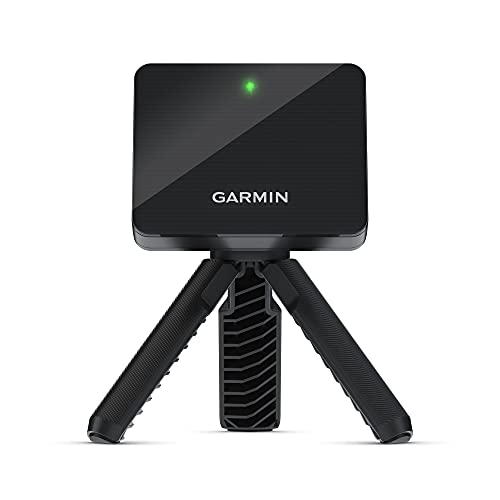
Garmin Approach R10 Launch Monitor
A radar launch monitor at a price that makes a home bay possible at all. It reads clubhead and ball data well enough to practise against, and it works outdoors as well, which means the purchase is not stranded if the room never happens.
Needs 12 ft x 18 ft
- Type
- Radar
- Use
- Indoor and outdoor
Best for: A first simulator, and anyone unsure whether the ceiling works.

Bearwill 5x4ft 31mm Hitting Mat
A 5 by 4 ft mat at 31 mm thickness. Thickness is the specification: a thin mat over a concrete slab transmits every fat shot straight into your wrists, and that is the single most common reason a home bay stops getting used.
- Size
- 5 x 4 ft
- Thickness
- 31 mm
Best for: Any simulator on a concrete floor, which is most of them.

HOMEVOL 10x8ft Net and Screen System
A 10 by 8 ft net and impact screen system, which is the cheapest complete way to stop a golf ball indoors. The frame is the part to inspect: a net system that flexes on impact is a net system that will eventually let one through.
- Size
- 10 x 8 ft
- Type
- Net and screen
Best for: A garage bay or a first setup where the budget is on the monitor.

GoSports Golf Simulator Impact Screen
A dedicated impact screen for a bay that already has a frame or an enclosure. Impact screens are consumables in a busy bay, so buying the screen separately from the frame is the right architecture rather than a compromise.
- Type
- Impact screen
- Use
- Projection
Best for: A permanent bay with its own frame.

BenQ TH671ST Short Throw Projector
Short throw is not optional in a golf bay. A standard projector has to sit far enough back that the golfer stands in the beam and casts a shadow across their own shot; a short throw unit mounts close to the screen and above the hitting area.
- Type
- Short throw
- Mount
- Ceiling, near screen
Best for: Any bay where the image is projected rather than shown on a television.

Garmin Approach R50 Launch Monitor
A camera-based launch monitor with a built-in display, which is a different class of instrument from a radar unit: it reads the ball at impact rather than tracking it downrange, so it works in a shallow bay where radar struggles. Considerably more expensive and considerably more accurate.
Needs 12 ft x 18 ft
- Type
- Camera
- Display
- Built in
Best for: A dedicated bay and a player who practises seriously.
Prices move constantly, so confirm before you order. As an Amazon Associate we earn from qualifying purchases. Where a table is sold only through a manufacturer's own dealer network we say so on the card, and the button searches comparable tables you can order today rather than that exact model.
What a bay actually needs
| Requirement | Minimum | Comfortable | Why |
|---|---|---|---|
| Ceiling height | 9 ft | 10 ft | Nine feet is the floor for most adults with a driver, and 10 ft is where it stops being a compromise. |
| Bay width | 10 ft | 12 ft | Swing arc, plus room for a left and right handed player. |
| Bay depth | 14 ft | 18 ft | Ball flight before impact, plus space behind for the golfer. |
| Mat to screen | 8 ft | 10 ft | Enough flight for a radar unit to read, and a safer impact. |
Test the ceiling with your own driver, not with a tape measure. Published minimums assume an average swing plane and an average height. Stand where the mat will be, take a slow full swing, and watch the clubhead through the top of the arc. Light fittings, ductwork and joists are all things people discover the expensive way.
The components, and which matter most
- The launch monitor. The instrument, and the largest single decision. Radar units like the Approach R10 track the ball downrange and therefore want depth behind the mat. Camera-based units like the Approach R50 read the ball at impact, which works in a shallower bay and costs considerably more.
- The mat, and its thickness. Underrated and the most common reason a bay stops being used. A thin mat over a concrete slab transmits every fat shot straight into the wrists and elbows. The 31 mm mat is the right sort of thickness. This is a health decision more than a comfort one.
- The screen or net. A net and screen system is the cheapest complete answer. Inspect the frame rather than the fabric: a frame that flexes on impact is one that will eventually let a ball through, and the wall behind it will not enjoy that. Screens on their own exist because they are consumables in a busy bay.
- The projector, if you project. Short throw, mandatory, mounted close to the screen and above the hitting area. The BenQ TH671ST and the Optoma GT2000HDR are the two common choices.
- A computer, and the software subscription. The recurring cost people forget. Most simulation platforms charge annually for course libraries, and that is a real ongoing line item rather than a one-off.
Why short throw is not negotiable
A standard throw projector needs to sit several times the image width back from the screen. In a golf bay that puts it behind the golfer, which means the golfer stands in the beam and casts a full body shadow across the image at precisely the moment of impact. Every attempt to work around this ends with the projector mounted somewhere awkward and the image keystoned.
A short throw unit fills the same screen from a fraction of the distance and mounts on the ceiling ahead of the hitting position, out of both the beam path and the swing path. It costs more than a standard projector of similar brightness, and it is the difference between a bay that works and one that is permanently irritating.
The thousand dollar bay
A working simulator does not require a five figure enclosure. The minimum viable version:
- Radar launch monitor , around $480.
- A 31 mm hitting mat , around $90.
- Net and impact screen system , around $300.
- A laptop or tablet you already own, positioned to the side rather than projected.
That is about nine hundred dollars and it plays. Add short throw projection later once the bay has proved it gets used, because the projector is the most expensive optional component and the easiest to retrofit to an existing setup.
Where a simulator fits, and where it does not
A standard basement ceiling is eight feet, which is not enough for a full driver swing. What does work below grade is a bay deliberately set up for irons and wedges, which is genuinely valuable practice and should be a decision rather than a disappointment. A garage with a raised ceiling, a bonus room over a garage or a purpose built extension are the more common homes for a full bay.
Against the other anchor games, a simulator takes more floor and much more ceiling than anything else in this hobby, which is why it is the last thing added rather than the first. The trade against a pool table is covered in golf simulator against pool table, and the space figures for every game are in how much space each game needs.
Deciding on a specific model? We review the Complete golf simulator enclosure package review in full.
Frequently asked questions
What ceiling height do you need for a golf simulator?
9 ft is the absolute floor for most adults with a driver and 10 ft is where it stops being a compromise. Nine feet is the floor for most adults with a driver, and 10 ft is where it stops being a compromise. The check is not a calculation, it is a test: stand where the mat will go, take a slow full swing with a driver, and see whether the clubhead clears everything above. Do that before spending anything at all, because no product solves a ceiling.
How much space does a golf simulator need?
About 12 ft wide by 18 ft deep, and the depth is what surprises people. You need room for the swing, room between the mat and the screen so the ball has a flight before impact, and space behind the mat for the golfer and any radar unit that sits back there. A camera-based monitor at the ball needs less depth than a radar unit tracking the ball downrange, which is one practical reason to choose one.
Are budget golf launch monitors accurate enough?
For practice and for simulated rounds at home, yes. A radar unit at around five hundred dollars reads ball speed, launch angle and direction well enough that you can work on a swing and see the result change, which is what home practice is for. What it will not do is match the fitting-grade accuracy of a camera-based unit costing several thousand, particularly on partial shots and with certain club and ball combinations. Know which of those you are buying for.
Do I need a short throw projector for a golf simulator?
If you are projecting rather than using a television, yes. A standard throw projector has to sit far enough back from the screen that the golfer stands in the beam, which puts their own shadow across the shot and makes the image unreadable at the point of impact. A short throw unit mounts close to the screen and above the hitting area, out of the swing path and out of the beam. This is a hard requirement rather than a preference.
Can you put a golf simulator in a basement?
Only if the ceiling allows it, and most basements do not. 9 ft is the minimum for a full driver swing and standard basement ceilings are eight feet, which is not enough. What does work below grade is a bay set up for irons and wedges only, which is genuinely useful practice and should be planned deliberately rather than discovered. A garage with a raised ceiling or a bonus room over a garage is the more common answer.
What is the cheapest way to build a golf simulator?
A radar launch monitor, a thick hitting mat, a net and impact screen system and a laptop, which together come in around a thousand dollars. Skip the projector at first and use a television or a laptop screen positioned to the side. Add projection later once you know the bay gets used, since a short throw projector is the single most expensive optional component and the easiest to add to an existing bay.
Measuring your own room before anything is delivered? The Game Room Layout Planner is the paid version of these pages: 8 printable worksheets you fill in with your own numbers, plus the full PDF, $29.
How we work: we compare published manufacturer dimensions, the governing playing standards for each game, and reviews from owners who live with the equipment. We do not test games in person, and we say so on every page. Clearance figures here are researched guidance for planning a room, not professional advice: measure your own space, and have a slate table delivered, assembled and levelled by an installer rather than moving it yourself.