Best Arcade Cabinets for a Home Game Room
A four-player upright arcade cabinet needs about 3 ft 10 in by 11 ft including the standing zone and 8 ft of ceiling, which makes it the most space-efficient anchor game in a game room. Prioritise four player positions and microswitched controls over the advertised game count, because you will realistically play twenty games and touch the buttons every time.
An arcade cabinet is the most space-efficient game in this hobby by a wide margin, because cabinets were designed to stand shoulder to shoulder in a row. Side clearance is essentially zero. All the space a cabinet needs is in front of it, which means it slots into a corner of a room that is already full and it can be added to any build later with no floor preparation, no installer and no clearance band.
If the budget is under a thousand dollars, this is the wrong page and home arcade machines under $1,000 is the right one. Check the footprint with the arcade footprint planner before ordering.
Cabinets by format and budget
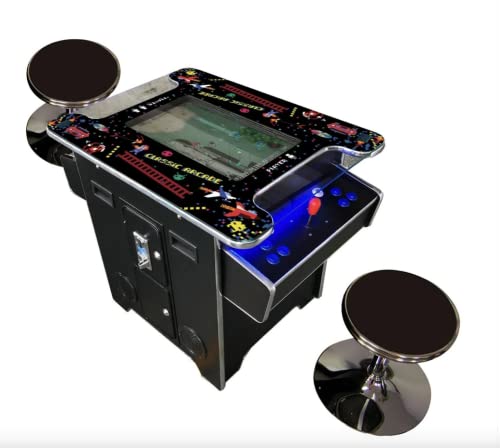
Commercial Cocktail Arcade Cabinet, 2-Player
A cocktail cabinet is a table with a screen in it, which means it does two jobs in a room that cannot spare floor for one. Two players sit facing each other and the screen flips between them, which is exactly how these worked in the arcades they came from.
Needs A table footprint, plus two chairs
- Format
- Cocktail table
- Players
- 2
Best for: A room where a full upright would dominate, or a bar area that needs a table anyway.

Doc and Pies Bartop Arcade Machine
A bartop machine with microswitched buttons and a proper joystick, which is the specification that separates an arcade cabinet from a novelty. It sits on a counter, so it occupies a surface rather than a floor, and that is the cheapest square footage in the room.
Needs A counter, no floor space at all
- Format
- Bartop
- Controls
- Microswitched
Best for: A bar top, a shelf, or a first machine.
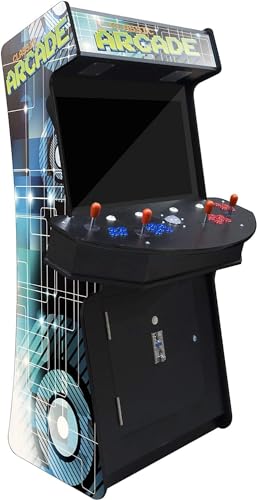
Bonus Round 3500-in-1 4-Player Cabinet
A full size four-player upright at the lower end of what real cabinets cost. Four player positions is the specification that matters more than the game count: a four-player cabinet is a party and a two-player cabinet is a queue.
Needs 3 ft 10 in x 11 ft
- Players
- 4
- Format
- Full upright
Best for: A game room where people arrive in groups.

Top Us Arcades 4-Player 4600-Game Cabinet
A four-player upright with a 32 in screen and a genuinely deep library. The larger screen matters when four people are standing at it, because the outer two players are looking at the display from an angle rather than square on.
Needs 3 ft 10 in x 11 ft
- Players
- 4
- Screen
- 32 in
Best for: The default full size cabinet for a finished game room.

Creative Arcades Full Size 4-Player Cabinet
A commercial grade cabinet built to survive being played by strangers, which in a home means it will simply never wear out. The controls are the part you feel: proper arcade sticks and buttons that are rebuildable rather than sealed units to be replaced.
Needs 3 ft 10 in x 11 ft
- Players
- 4
- Build
- Commercial
Best for: A dedicated room, built once, where the cabinet is a centrepiece.

Creative Arcades 10in Riser Pedestal
A riser pedestal with a locking drawer. Height is the difference between adults playing hunched and adults playing, and a cabinet adults do not enjoy is a cabinet nobody uses after the first month. The drawer holds the controllers and the cables.
- Height
- 10 in
- Storage
- Locking drawer
Best for: Any cabinet that sits low for adult players.
Prices move constantly, so confirm before you order. As an Amazon Associate we earn from qualifying purchases. Where a table is sold only through a manufacturer's own dealer network we say so on the card, and the button searches comparable tables you can order today rather than that exact model.
Floor area by format
| Format | Footprint | Standing zone | Room needed |
|---|---|---|---|
| Home arcade cabinet with riser | 26" x 24" | 30" front | 3 ft 2 in x 7 ft |
| Arcade cabinet, 2-player upright | 34" x 28" | 36" front | 3 ft 10 in x 8 ft 4 in |
| Arcade cabinet, 4-player upright | 34" x 48" | 42" front | 3 ft 10 in x 11 ft |
Depth includes the control panel overhang. Cabinets can sit shoulder to shoulder, so side clearance is nearly nothing. That is the whole reason arcade cabinets are the last thing to worry about when planning a room, and the first thing to add when a room is already built. Compare with every other game in how much space each game needs.
What actually decides how a cabinet feels
- The controls. Microswitched buttons and a real joystick with a proper gate, not membrane pads. This is the part your hands are on for every second of play, and it is the difference between a machine that feels like an arcade and one that feels like a toy. It is also the specification most listings are vaguest about.
- The number of player positions. Four rather than two. A four-player cabinet turns a room of six people into a game; a two-player cabinet turns them into a queue, and a queue is why a machine stops getting used.
- Screen size and mounting. Bigger matters at four players because the outer two are viewing at an angle. A properly mounted screen behind glass rather than a bare panel also survives an excited elbow.
- Cabinet rigidity. A cabinet that flexes when someone leans on the control panel will loosen at the joints over a few years. Weight is a decent proxy here.
- Height, and the riser. Many cabinets sit low enough that adults play hunched. A riser pedestal fixes it, and a cabinet adults do not enjoy playing is a cabinet nobody plays after the first month.
- The game count, last. A machine advertising thousands of titles contains many near-duplicates and regional variants. You will play twenty. That is fine, it is simply not the thing to choose on.
Measure the route in, not only the room. A full size upright stands 68 to 77 inches and arrives largely assembled. A basement stairwell with a turn at the bottom, a low soffit, or a doorway with a tight approach angle are all genuine obstacles for something that size. Measure the narrowest point and the tightest turn before ordering.
Formats, and who each one is for
- Full size upright. The real thing, standing on the floor, four players wide if you choose well. Best presence, best play, most commitment. Top Us 4600 and Creative Arcades are the two to look at.
- Cocktail table. A table with a screen in it and controls at each end. Two jobs, one footprint, and it belongs in a bar area where a table was needed anyway. The commercial cocktail cabinet is the version worth having.
- Bartop. Real controls on a counter. Occupies a surface rather than a floor, which in a small room is the cheapest square footage available. The Doc and Pies bartop is the one with proper microswitched controls.
- Home cabinets, three quarter scale. The Arcade1Up class at around $500. Smaller, lighter, one licensed game family per cabinet, and genuinely good in a family room. Covered in the sub $1,000 roundup.
- Countercades. The smallest format , sitting on a shelf at around $150. A novelty rather than a game room anchor, and a genuinely fun one.
Power, and when a circuit becomes necessary
One cabinet on an existing circuit is fine. The problem arrives with combination: two cabinets, a pinball machine, a kegerator, a beverage fridge and a dehumidifier on the same basement circuit will trip it, and it will trip on the evening you have people over. The cabinets themselves are not the issue; the compressor surge from refrigeration is. Budget $200 to $600 for a dedicated 20 A circuit if the room is heading that way, and run it while the ceiling is open. Detail in game room electrical planning.
Where to go from here
For the smaller and cheaper machines, see arcade machines under $1,000. For the other coin-op option, see pinball machines and the comparison in pinball against arcade. If you are weighing a licensed single-game cabinet against a multi-game machine, that argument is in dedicated cabinet against multicade. And the full buildout prices a four-player cabinet alongside everything else a finished room needs.
Frequently asked questions
How much space does an arcade cabinet need?
Far less than any other game in this hobby. A two-player upright needs about 3 ft 10 in by 8 ft 4 in including the standing zone, and a four-player upright needs 3 ft 10 in by 11 ft because four people have to stand side by side. Side clearance is almost nothing, roughly 6 inches, because cabinets are designed to stand shoulder to shoulder in a row exactly as they did in arcades.
What ceiling height does an arcade cabinet need?
About 8 ft. Full size upright cabinets stand 68 to 77 inches tall and a riser adds another 10 to 14 inches, which puts the top of a raised cabinet close to seven feet. The other consideration is getting it into the room: a cabinet arrives assembled or in large sections, and a low basement stairwell with a turn at the bottom is a genuine obstacle for something six and a half feet tall.
Are multi-game arcade cabinets worth it?
Yes for a home room, with a caveat about how the game count is counted. A machine advertising thousands of games contains a great many near-duplicates and regional variants, and you will realistically play twenty of them. That is not a scam, it is how emulation libraries are assembled, and twenty good games is plenty. What matters far more than the number is the controls: microswitched buttons and a real joystick, because that is the part you touch.
What is the difference between a two-player and a four-player cabinet?
Roughly a foot of cabinet width, a wider control panel with two more sets of controls, and a fundamental difference in how the machine gets used. A four-player cabinet supports the games that are best in a group and lets a room of people play together. A two-player cabinet creates a queue. If the room is a social room, four players is the specification to spend on ahead of the screen, the artwork or the game count.
Should I buy an arcade cabinet or build one?
Building gives you exactly the cabinet you want and costs a similar amount once you have bought a monitor, controls, a computer, wood and artwork, plus a great deal of time. Buying gets a working machine delivered. The honest case for building is if you enjoy the building, which is a real reason. The case for buying is that a commercial cabinet has a rigid cabinet, a properly mounted screen and controls that are already tuned, and getting all three right from scratch is harder than it looks.
Do arcade cabinets need a dedicated circuit?
A single cabinet, no. Two cabinets plus a pinball machine plus a kegerator on one basement circuit, yes, and it will trip on the evening you have people over. Each cabinet draws relatively little on its own, but compressor loads from a kegerator or a beverage fridge draw a large surge on start, and that is what puts a shared circuit over the edge. Budget $200 to $600 for a dedicated 20 A circuit if the room is going that direction.
Measuring your own room before anything is delivered? The Game Room Layout Planner is the paid version of these pages: 8 printable worksheets you fill in with your own numbers, plus the full PDF, $29.
How we work: we compare published manufacturer dimensions, the governing playing standards for each game, and reviews from owners who live with the equipment. We do not test games in person, and we say so on every page. Clearance figures here are researched guidance for planning a room, not professional advice: measure your own space, and have a slate table delivered, assembled and levelled by an installer rather than moving it yourself.