Best Kegerators for a Game Room, and Whether You Need One
A kegerator makes sense if the household gets through a half barrel keg in about two months, since tapped beer stays good for six to eight weeks. Buy a double tap unit so two beers can coexist, budget for line cleaning every two weeks, and plan a dedicated 20 A circuit if arcade equipment and a beverage fridge are also going in the room. For a room that hosts monthly, a beverage fridge is the better purchase.
A kegerator is the item that makes a game room feel finished, and it is also the item most likely to be bought for the wrong reason. The deciding question is not budget, it is volume: a half barrel holds roughly 165 servings and tapped beer stays good for six to eight weeks, so the maths only works if the room gets through a keg in about two months. Below that you are pouring flat beer at the end of every keg.
Before ordering, read the honest alternative at the top of the picks below. For a great many game rooms a 130-can beverage fridge at a third of the price is the better purchase, and saying so is more useful than selling you a compressor.
Kegerators, and the alternative

EUHOMY 130-Can Beverage Refrigerator
A 130-can glass door beverage fridge. Listed first on a kegerator page because for most game rooms it is the better purchase: a third of the price, no gas, no line cleaning, and it holds soft drinks for the people who are not drinking beer, which is what actually gets drunk on a family evening.
- Capacity
- 130 cans
- Door
- Glass
Best for: Most game rooms, honestly.

VEVOR Single Tap Kegerator
A single tap unit at the price where a kegerator becomes a reasonable purchase rather than an indulgence. Single tap means one beer at a time, which is the main practical limitation and the reason two taps is the upgrade most owners wish they had made.
- Taps
- 1
- Keg
- Full size
Best for: A first kegerator, or a household that drinks one thing.
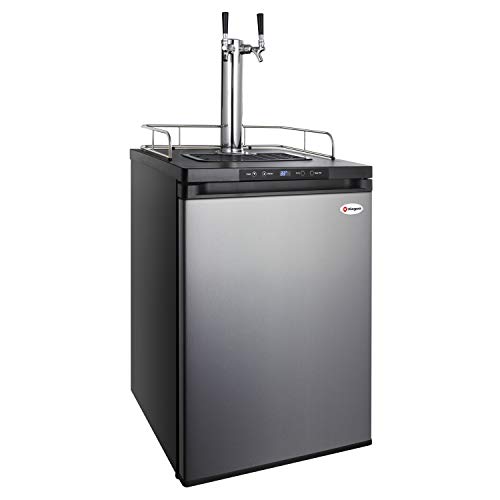
Kegco HBK309S-2 Homebrew Kegerator
Configured for Cornelius kegs rather than commercial ones, which is the specification a home brewer needs and which is not interchangeable. If you brew, this is the version to buy and the commercial-keg units are the wrong shape.
- Kegs
- Cornelius
- Finish
- Stainless
Best for: Anyone who brews their own.

Kegco K309B-2 Double Faucet Kegerator
A double faucet unit with a digital thermostat. Two taps is the upgrade that matters: it lets a stout and a lager live in the same unit, which means the second half of a keg does not go flat while everyone waits for the first to finish.
- Taps
- 2
- Control
- Digital thermostat
Best for: The default game room kegerator.

Kegco 3PK309SS-2 Dual Tap Kegerator
The same dual tap capability in a stainless cabinet, which matters in a finished bar where the unit is visible rather than tucked under a counter. Better door seal and a more consistent temperature across the cabinet.
- Taps
- 2
- Cabinet
- Stainless
Best for: A finished bar where the kegerator is on show.

BROTTAR Bar Cabinet with Built-In Fridge
A bar cabinet with a refrigerator built into it, which solves the storage and the cold in one purchase and one footprint. In a room where the bar area is small, one cabinet doing two jobs is worth more than two better objects.
- Type
- Bar cabinet
- Fridge
- Included
Best for: A small bar area where floor space is the constraint.
Prices move constantly, so confirm before you order. As an Amazon Associate we earn from qualifying purchases. Where a table is sold only through a manufacturer's own dealer network we say so on the card, and the button searches comparable tables you can order today rather than that exact model.
The volume maths, done once
| Keg | Volume | 12 oz servings | Right for |
|---|---|---|---|
| Half barrel | 15.5 gal | About 165 | A household getting through a keg in two months. |
| Quarter barrel | 7.75 gal | About 82 | Lower volume, or a second beer alongside a half barrel. |
| Sixth barrel | 5.2 gal | About 55 | Two different beers in one dual tap cabinet. |
| Cornelius keg | 5 gal | About 53 | Home brewers. Needs a unit configured for it. |
Tapped beer keeps well for six to eight weeks under proper CO2 pressure and refrigeration. Multiply that by your household and be honest about the answer. A room that hosts a big evening once a month and drinks little in between is a beverage fridge room, not a kegerator room, and the full argument is in kegerator against beverage fridge.
What actually matters in a kegerator
- Number of taps. Two, if you can. This is the specification single tap owners most often regret. Two taps means two beers, which means a keg is not a two month commitment to one thing and the tail of a keg does not sit flat.
- Temperature control. A digital thermostat rather than a dial. Beer wants 36 to 38 degrees Fahrenheit, and temperature and CO2 pressure are linked: too warm and it over-carbonates and pours as foam, too cold and it goes flat and pours slowly. Most pouring problems people blame on a keg are temperature or pressure.
- Keg compatibility. Full size units take a half barrel and usually a quarter or sixth barrel with the right coupler. Cornelius kegs are a different shape and need a unit configured for them . Coupler types are not universal either, so check against the kegs you will actually buy.
- Cabinet and door seal. A good seal holds temperature across the whole cabinet rather than only near the compressor, which matters when a keg is a fifteen gallon thermal mass taking hours to recover from a warm patch.
- Where the CO2 tank lives. Inside the cabinet is tidier and eats keg space; outside is more flexible and means a tank standing next to the unit. Neither is wrong and it is worth knowing before the unit arrives.
Line cleaning is the part people do not plan for. Beer lines grow bacteria and yeast, and a neglected line makes good beer taste sour in a way owners usually blame on the keg. Clean every two weeks in constant use and always between kegs, with a proper cleaning kit. It takes about twenty minutes. If that sounds like too much, that is a genuine and sufficient reason to buy a beverage fridge instead.
Power, and when the circuit becomes necessary
A kegerator on its own draws modestly in normal running and pulls a substantial surge every time the compressor starts. On an existing basement circuit that is fine. Add a beverage fridge, two arcade cabinets, a pinball machine and a dehumidifier and the circuit will trip, and it will trip on the evening you have people over, because that is when everything is running at once.
Budget $200 to $600 for a dedicated 20 A circuit, put the refrigeration on one and the cabinets on another, and run it while the ceiling is open. Detail in game room electrical planning, and the complete bar build is in how to build a home bar.
The rest of the bar
- Storage and a surface. A bar cabinet with power outlets gives you glass and bottle storage plus somewhere to plug in without a lead across a walkway. The version with a fridge built in does both jobs in one footprint.
- Somewhere to sit. Four stools, counter height rather than bar height in most game rooms. See the stool roundup and the height calculator.
- Soft drinks. A glass door beverage fridge alongside the kegerator, because a room with only beer in it excludes whoever is driving and whoever is nine.
- Something to eat. A popcorn cart is silly and is reliably the most used item in any finished game room.
The complete bar priced alongside two anchor games and an arcade cabinet is in the full buildout.
Frequently asked questions
Is a kegerator worth it for a home game room?
It depends on volume. A full size keg holds roughly 165 twelve ounce servings and beer on tap stays good for about six to eight weeks once tapped, so the maths works if the household plus guests get through a keg in about two months. Below that, you are pouring flat beer at the end of every keg and the economics stop working. For a room that hosts a big evening once a month, a beverage fridge and bottles is genuinely the better purchase.
Do kegerators need their own electrical circuit?
A kegerator alone on an existing circuit is fine. The problem is combination: a kegerator, a beverage fridge, two arcade cabinets and a dehumidifier on one basement circuit will trip, because a compressor draws a substantial surge on start. If the room is heading that way, budget $200 to $600 for a dedicated 20 A circuit and run it while the ceiling is open rather than afterwards.
Single tap or double tap kegerator?
Double, if the budget stretches, and it is the upgrade most single tap owners say they wish they had made. A single tap means one beer at a time and a keg that has to be finished before the next one starts, which either forces everyone onto the same beer or means the tail of a keg goes flat. Two taps lets a stout and a lager coexist, which is what a room with several people in it actually wants.
How often do you need to clean beer lines?
Every two weeks with a proper line cleaning kit if the unit is in constant use, and always between kegs. This is the part of kegerator ownership people underestimate: beer lines grow bacteria and yeast, and a neglected line makes good beer taste sour in a way that owners often blame on the keg. A cleaning kit is inexpensive and the job takes about twenty minutes. If that sounds like too much, buy a beverage fridge instead.
What temperature should a kegerator be set to?
Between 36 and 38 degrees Fahrenheit for most beer, and it matters more than people expect because temperature and CO2 pressure are linked. Too warm and the beer over-carbonates and pours as foam; too cold and it goes flat and pours slowly. A digital thermostat is worth the small premium precisely because it lets you hold a figure rather than guess at a dial, and most pouring problems people blame on the beer are actually temperature or pressure.
What size keg fits in a kegerator?
Most full size home units take a half barrel, which is the standard 15.5 gallon keg, and almost all of them also take a quarter barrel or a sixth barrel with the right coupler. Cornelius kegs, which home brewers use, are a different shape and need a unit configured for them: two Cornelius kegs typically fit where one commercial half barrel would. Check the specification against the kegs you will actually buy, because coupler types are not universal either.
Measuring your own room before anything is delivered? The Game Room Layout Planner is the paid version of these pages: 8 printable worksheets you fill in with your own numbers, plus the full PDF, $29.
How we work: we compare published manufacturer dimensions, the governing playing standards for each game, and reviews from owners who live with the equipment. We do not test games in person, and we say so on every page. Clearance figures here are researched guidance for planning a room, not professional advice: measure your own space, and have a slate table delivered, assembled and levelled by an installer rather than moving it yourself.