Best Pinball Machines for a Home Game Room
A new commercial pinball machine costs about $7,000 in professional trim and $9,000 to $11,000 in premium, while home-market machines start around $1,000. A machine needs about 3 ft 9 in by 10 ft 7 in of floor and 7 ft 6 in of ceiling. Start with a home-market machine to find out whether your household plays pinball weekly before spending seven thousand dollars on the answer.
Pinball is the highest cost per square foot in this hobby and the most mechanically demanding thing you will own. It is also the only game in a room that has weight, noise and physical resistance, and there is nothing else like a good machine on a Friday evening. The question is never whether pinball is good. It is whether your household will play it weekly, and that is worth finding out for a thousand dollars rather than seven.
If you already know pinball is the game, the commercial machines below are what that costs. Either way, check the room and the route in with the footprint planner first, because a machine with a backbox up is close to seven feet tall.
Pinball machines from home market to premium

Wonderland Alice Goes to Wonderland Pinball
A real pinball machine at roughly a seventh of the price of a new Stern. Home-market build rather than route-hardened, which is the right trade for a machine seeing a few hundred games a year instead of a few thousand a month. Flippers, ramps, targets and noise, which is most of what pinball is.
Needs 3 ft 9 in x 10 ft 7 in
- Type
- Home market
- Players
- Multi
Best for: Finding out whether your household actually plays pinball weekly.

Stern John Wick Pro Pinball
A current generation Stern professional model, which is the entry point into machines built the way commercial pinball is built: a proper playfield, real ramps, a full rule set with deep scoring and code that gets updated. The Pro trim is the base of three and it is a complete machine, not a stripped one.
Needs 3 ft 9 in x 10 ft 7 in
- Trim
- Pro
- Build
- Commercial
Best for: Someone who already knows pinball is the game they want.
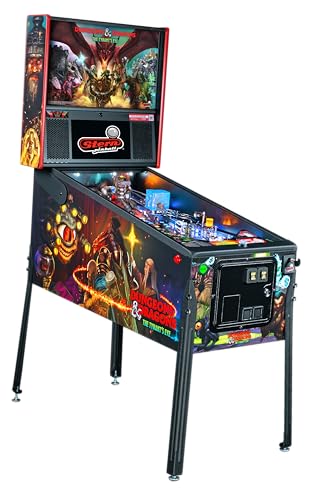
Stern Dungeons and Dragons Pro Pinball
The same class of machine with a rule set built around progression, which is what makes a pinball machine hold up over years rather than months. Rule depth is the specification that decides whether a home machine still gets played in year three.
Needs 3 ft 9 in x 10 ft 7 in
- Trim
- Pro
- Rules
- Deep progression
Best for: A player who wants a machine to learn rather than a machine to bash.
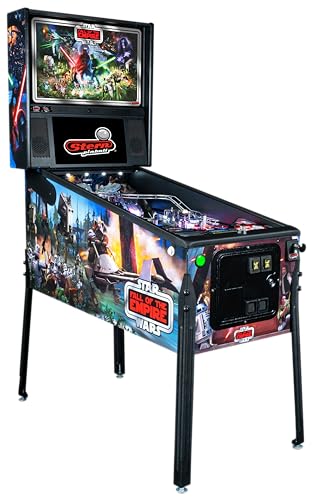
Stern Star Wars Fall of the Empire, Pro
A fast, flowing layout with a licence that means everyone who walks past it will want a game. Theme genuinely matters in a home machine in a way it does not on a route, because the machine is in your house and you look at it every day.
Needs 3 ft 9 in x 10 ft 7 in
- Trim
- Pro
- Style
- Fast, flowing
Best for: A room where the machine is furniture as well as a game.

Stern Deadpool Premium Pinball
A premium trim machine, which adds playfield mechanisms, extra ramps and lighting over the Pro version of the same title. Whether that is worth roughly three thousand dollars is a genuine question and the honest answer is that it depends on how much of the difference you will notice after a hundred games.
Needs 3 ft 9 in x 10 ft 7 in
- Trim
- Premium
- Mechanisms
- Extra
Best for: A collector, or a room where this is the only machine.
Jersey Jack Pinball Machines
Boutique machines with elaborate playfields and large displays, sold through distributors rather than retailers. Named because they are a real part of this market and worth knowing about, and the button searches home pinball machines available now rather than pretending these are a click away.
Needs 3 ft 9 in x 10 ft 7 in
Best for: A collector who is already talking to a distributor.
Sold through Jersey Jack Pinball's own dealer network rather than a retailer. This button searches comparable tables you can buy today.
Prices move constantly, so confirm before you order. As an Amazon Associate we earn from qualifying purchases. Where a table is sold only through a manufacturer's own dealer network we say so on the card, and the button searches comparable tables you can order today rather than that exact model.
Space, access and power
| Requirement | Figure | Why |
|---|---|---|
| Cabinet footprint | 29" x 55" | Roughly two and a half feet by four and a half. |
| Standing room, front | 36" | A player leans into the machine and nudges it. |
| Service access, rear and sides | 8" | The backbox opens and the playfield lifts. |
| Room needed | 3 ft 9 in x 10 ft 7 in | Which is remarkably little for what it delivers. |
| Ceiling height | 7 ft 6 in | The backbox tops out near 76 in and has to fold or clear on the way in. |
| Weight | 250 to 350 lb | Two people minimum, and it does not fold. |
Measure the route in before you buy. A machine arrives assembled with the backbox folded down and is still close to five feet long, two and a half feet wide and 250 lb or more. A basement stairwell with a quarter turn is the single most common reason a delivery is refused. Photograph the stairs, the turn and the doorway when you order, not on the day.
Pro, Premium and LE, in plain terms
Modern commercial pinball ships in three trims of the same title, and the marketing does not make the difference obvious.
- Pro. The base machine, with the complete rule set and the core shots. It is a full game rather than a stripped one, which is the thing most first-time buyers do not realise. Around $7,000. John Wick Pro and Dungeons and Dragons Pro are current examples.
- Premium. Adds playfield mechanisms, extra ramps, more elaborate lighting and different artwork, at roughly $2,500 to $3,000 more. Whether that is worth it depends entirely on how much of the difference you will still be noticing after a hundred games. Deadpool Premium is the example here.
- Limited Edition. Cosmetic upgrades, a numbered run, and a price that reflects scarcity rather than gameplay. Bought by collectors, and a poor first machine.
The practical advice for a first commercial machine is to buy the Pro of a title you love rather than the Premium of one you like, because theme matters enormously in a machine that lives in your house and that you look at every day.
What actually makes a machine hold up at home
- Rule depth. The thing that decides whether a machine is still played in year three. A machine with a shallow rule set is fun for a month; one with real progression, modes and a wizard mode gives you something to work toward for years.
- Flow. How the shots connect. A machine where a good shot leads naturally to another good shot is satisfying at every skill level. A machine of disconnected targets is frustrating for beginners and boring for good players.
- Theme. Underrated in home use and heavily rated by owners. A route machine is chosen on earnings; a home machine is chosen on whether you want to look at it every day and whether guests want a game when they walk past.
- Difficulty. A machine set up brutally is not fun in a house where most players are casual. Home machines can be adjusted, outlanes can be tightened or opened, and this is worth knowing because it is the cheapest way to change how a machine feels.
Maintenance is part of the purchase
A pinball machine is several hundred mechanical parts absorbing constant impact. Nothing about the maintenance is difficult and all of it is well documented, but it is real work and a buyer should know that in advance rather than discover it.
- Clean and wax the playfield a few times a year. It also makes the machine faster.
- Replace rubbers annually on a machine in regular use. A kit is inexpensive.
- Change bulbs as they go, and check for a burned-out insert that is quietly making a shot ambiguous.
- Adjust switches that stop registering, which is the most common fault by a wide margin.
- Rebuild flipper assemblies every few years. A weak flipper makes half the shots impossible and it is usually blamed on the player.
- Keep the room dry. Below grade, a dehumidifier protects the electronics and the playfield finish alongside everything else.
The full picture of what ownership involves is in owning a pinball machine.
Where to go from here
If pinball at seven thousand dollars is not the right first machine, an arcade cabinet delivers more play for less money and almost no maintenance, and the comparison is in pinball against arcade cabinet. For a room that prices a pinball machine alongside two anchor games and a bar, see the full buildout.
Frequently asked questions
How much does a pinball machine cost?
A new commercial machine from a major manufacturer runs about $7,000 for a professional trim and $9,000 to $11,000 for premium and limited editions. Home-market machines built for lighter use start around $1,000. Used machines vary enormously, from a few hundred dollars for a project to well over new price for a sought-after title in good condition. The gap between the home-market and commercial tiers is the largest in this hobby.
How much space does a pinball machine need?
About 3 ft 9 in by 10 ft 7 in, which is a cabinet of roughly 29 by 55 inches plus standing room at the front and service access at the back. Leave 8 in behind the backbox for service access and the coin door swing at the front. Ceiling height wants 7 ft 6 in, because the backbox tops out near 76 inches and has to be folded or cleared on the way in.
Is a pinball machine worth it for a home?
It is the highest cost per square foot in this hobby and the most mechanically demanding thing you will own, so the honest answer is that it depends on whether it gets played weekly. A machine that does is one of the best things in a game room, because nothing else in the house has that combination of noise, physicality and difficulty. A machine that does not is several thousand dollars of furniture. Start with a home-market machine at around a thousand dollars and find out which you have.
What is the difference between Pro, Premium and LE pinball?
They are trim levels of the same title. Pro is the base machine with the full rule set and the core layout, and it is a complete game rather than a stripped one. Premium adds playfield mechanisms, extra ramps, more elaborate lighting and different artwork. Limited Edition adds cosmetic upgrades and a numbered run. The rule set and the shots are largely shared, so the Pro plays the same game with fewer moving parts, and it costs several thousand dollars less.
Do pinball machines need maintenance?
Yes, more than anything else in a game room. A machine is several hundred mechanical parts under constant impact. Expect to clean and wax the playfield a few times a year, replace rubbers annually on a machine in regular use, change bulbs, adjust switches, and occasionally rebuild a flipper assembly. None of it is difficult and all of it is documented, but a pinball machine is a hobby in itself as well as a game, and buyers who do not want that should know it in advance.
Should I buy a used pinball machine?
It is the best value in the category and the easiest way to buy a problem. The things to check are playfield wear at the shooter lane and around the inserts, which cannot be repaired cheaply; whether the display is original and working, since some are expensive and scarce; and whether the machine has been shopped, meaning cleaned and rebuilt, or merely turned on. Buy from someone who can show you it working, play it for twenty minutes, and be sceptical of anything sold as needing only minor work.
Measuring your own room before anything is delivered? The Game Room Layout Planner is the paid version of these pages: 8 printable worksheets you fill in with your own numbers, plus the full PDF, $29.
How we work: we compare published manufacturer dimensions, the governing playing standards for each game, and reviews from owners who live with the equipment. We do not test games in person, and we say so on every page. Clearance figures here are researched guidance for planning a room, not professional advice: measure your own space, and have a slate table delivered, assembled and levelled by an installer rather than moving it yourself.