Best Game Room Storage and Decor
A game room needs vertical storage for cues, because leaning cues take a permanent bend within a season; closed storage for chips, darts, chalk and spare parts; and open shelving for board games, because visible games get played. Give every game-related object a home before the room is finished and keep everything that is not a game out of it, which is what stops a game room becoming a storage room.
Storage is the least interesting category on this site and the one that decides whether a game room is still a game room in two years. The failure is always the same and it is gradual: one box of things that do not belong appears in a corner, nothing else has a designated place, and eighteen months later the room is where the household puts things and the table has a laundry basket on it.
Then the cue rack, which is a different problem entirely: cues left leaning in a corner take a permanent bend within a season and faster in a damp basement. A wall rack is under forty dollars and four replacement cues cost more.
Storage, and a little decor
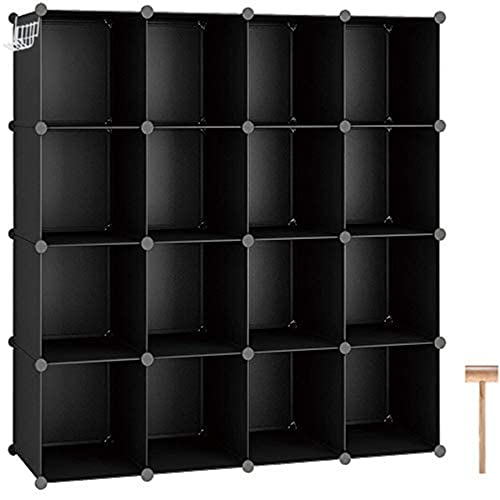
C&AHOME 16-Cube Storage Organizer
Sixteen cubes for thirty six dollars, which is the fastest way to give every loose object in a game room a home. In a room full of small expensive things that get left on a table rail, this is not tidiness, it is protection.
- Cubes
- 16
- Type
- Modular
Best for: Any room, and the first storage most people should buy.

Viper Dart Caddy Wall Holder
A wall caddy for darts. Darts left on a windowsill get stood on, points down, which is a genuinely unpleasant way to discover a storage problem. This is the smallest useful purchase in the room.
- Type
- Wall caddy
- Mounts
- Beside the board
Best for: Any wall with a dartboard on it.

Viper Solid Oak Wall Cue Rack, 8 Cues
A solid oak wall rack for eight cues. Cues left leaning in a corner take a permanent bend inside a season, faster in a humid basement. Thirty eight dollars against four warped cues is not a close decision.
- Capacity
- 8 cues
- Mount
- Wall
Best for: Any room with a pool table in it.

Huuger 5-Tier Open Bookshelf
Five tiers of open shelving for board games, glassware and the things that would otherwise end up on a table rail. Open rather than closed on purpose here: a game room wants some of its contents visible, because visible games get played.
- Tiers
- 5
- Type
- Open display
Best for: A finished room where the storage is also part of the look.

GSE Wall Cue Rack and Dartboard Cabinet
A wall unit that stores eight cues and houses a dartboard behind closing doors. In a pool room the wall behind the table is dead space, and this converts it into cue storage plus a second game without taking a single square foot of floor.
- Cues
- 8
- Board
- Cabinet included
Best for: A room with a pool table and a spare wall.

Gamerneon Game Room LED Sign
An LED neon sign for the arcade wall or over the bar. Completely unnecessary, and it does more for how a finished room feels than any piece of furniture at the same price, which is a real argument rather than a joke about decor.
- Type
- LED neon
- Use
- Wall accent
Best for: A room that is technically finished and feels flat.
Prices move constantly, so confirm before you order. As an Amazon Associate we earn from qualifying purchases. Where a table is sold only through a manufacturer's own dealer network we say so on the card, and the button searches comparable tables you can order today rather than that exact model.
What needs storing, and how
| What | Storage type | Why |
|---|---|---|
| Pool cues | Vertical rack, wall or floor | Leaning cues take a permanent bend. Not optional. |
| Darts and flights | Wall caddy or inside the cabinet doors | Darts left on a surface get stood on, points up. |
| Chalk, tips, brushes | Closed cube or drawer | Small, cheap, and impossible to find when loose. |
| Poker chips and cards | The case, in a cube | A loose set loses forty chips a year to sofas. |
| Board games | Open shelving | Visible games get played. Boxed ones do not. |
| Glassware | Bar cabinet | Near the bar, off the table, out of a walkway. |
| Folding tops and tables | On edge against a clear wall | Needs a specific wall reserved for it, planned in advance. |
| Table cover | Folded in a cube, not on the floor | A cover that lives on the floor collects grit and then meets cloth. |
Storage in a game room is a moisture question as well as a tidiness one. Cues warp, sisal dartboards swell, cards curl and hardwood boards move, all with humidity. Hold the room between 45 and 50 percent relative humidity with a dehumidifier and everything you store lasts longer. Detail in humidity and climate control.
The wall behind the table
In a room with a pool table, the wall behind it is dead space: nothing can stand there because it is inside the cue clearance band, and nothing can hang low there for the same reason. That makes it the highest value wall in the room for anything shallow and mounted high.
The combined cue rack and dartboard cabinet is the best use of it: cue storage plus a second game, on a wall that could hold nothing else, taking no floor at all. Where that is too much, a plain wall rack and a dry erase scoreboard do most of the same job for under seventy dollars.
Open against closed
The distinction that makes storage work in this specific room: things people play get open shelving, things people need get closed storage. A stack of board games visible on a five tier open shelf gets pulled down on a wet Sunday. The same games in a cupboard do not, ever, which is a small and consistent finding across every room with both.
Chalk, spare tips, poker chips, darts, cards, cleaning supplies and cables all go behind doors, in cubes , because visible clutter in a game room costs more perceived space than any piece of furniture in it and because these are the things that end up on a table rail otherwise.
The decor argument, made properly
A finished game room that is technically complete very often feels flat, and the reason is usually that every object in it is equipment. Three inexpensive things fix that more effectively than another few hundred dollars of anything functional would.
- Light at the perimeter. Fifty feet of LED strip along a ceiling line for thirteen dollars. Light at the edges is what stops a low ceiling reading as a lid.
- A rug. A large area rug over the seating half. It kills echo, warms a slab and defines a zone in a room that otherwise reads as one space.
- A sign. A neon sign or a gamer sign for the arcade wall. Twenty nine dollars, and every good game room has one.
Past those three, decor is decor. Spend the next hundred dollars on the light over the table instead, which changes how the room plays rather than how it looks.
The rule that keeps the room
Storage with doors, and nothing in the storage that is not a game. That is the whole discipline, and it is what separates rooms that are still game rooms in five years from rooms that quietly became somewhere to put the Christmas decorations. It costs about seventy dollars to set up and nothing at all to maintain, and it is the cheapest thing on this entire site.
For the complete room, see the buildouts, which price storage alongside everything else rather than treating it as an afterthought.
Frequently asked questions
How do you stop a game room turning into a storage room?
Give every game-related object a home before the room is finished, and keep anything that is not a game out of that storage. This sounds trivial and it is the single thing that determines whether a game room still exists in two years. The failure pattern is always the same: one box of things that do not belong appears in a corner, nothing else has a designated place, and within eighteen months the room is where the household puts things.
What storage does a game room actually need?
Vertical storage for cues, which is not optional because leaning cues warp. Closed storage for chips, cards, darts, chalk and spare parts, so the small expensive things are not on a table rail. Open shelving for board games, because visible games get played and boxed ones do not. And somewhere for a folding poker top or a conversion top to live on edge against a wall.
Why do pool cues warp?
Because a cue leaning at an angle is being bent by its own weight, continuously, and wood takes a permanent set. Humidity accelerates it enormously, which is why basements are the worst place for a leaning cue. Vertical storage in a rack removes the load entirely, and holding the room between 45 and 50 percent relative humidity removes most of the rest. A rack costs under forty dollars and four replacement cues cost more.
Is game room decor worth spending on?
A small amount of it, yes, and not for the reason people assume. A finished game room that is technically complete often feels flat, and the reason is usually that everything in it is equipment. A neon sign, a rug and light at the perimeter cost under two hundred dollars combined and change how the room reads more than another two hundred dollars of anything functional would. Beyond that, decor is decor.
Where should a TV go in a game room?
On the wall, on a full motion mount, at the end of the room away from where cues swing and darts fly. A game room contains a lot of fast moving objects and a screen on a stand is the item most likely to end badly. Full motion also lets it aim at the seating on one evening and the bar on another, which fixed brackets do not.
How do you store a folding game table?
On its edge against a wall, on something soft rather than directly on concrete, in a spot that is genuinely clear for its full length. This is worth planning before buying rather than after: a folded ping pong table needs about two feet of depth and nine feet of clear wall, and if the only such wall is the one with the dartboard on it, you have a problem no amount of rearranging fixes.
Measuring your own room before anything is delivered? The Game Room Layout Planner is the paid version of these pages: 8 printable worksheets you fill in with your own numbers, plus the full PDF, $29.
How we work: we compare published manufacturer dimensions, the governing playing standards for each game, and reviews from owners who live with the equipment. We do not test games in person, and we say so on every page. Clearance figures here are researched guidance for planning a room, not professional advice: measure your own space, and have a slate table delivered, assembled and levelled by an installer rather than moving it yourself.