Best Poker Chip Sets for a Home Game
Five hundred chips is the right set size for a home game, covering eight players with room for rebuys. Buy 13.5 to 14 g clay composite chips if the same people play every month, and printed denominations if the cast of players changes, because unmarked chips get re-explained several times an evening and argued about once.
Chips are a small purchase that changes the feel of an evening more than the price suggests, and the decision comes down to one question that is not the one most buyers ask. Not clay against plastic. It is whether the same people play every month, because that decides whether printed denominations or chip weight is the thing worth spending on.
If the players change from month to month, buy the numbered set instead. Printed values remove the twenty minutes an evening that unmarked chips cost in explanation, and that is worth more than the difference in feel to a group that plays occasionally.
Chip sets, and the surface they go on

HEITOK 14g Numbered Chip Set, 500
Five hundred 14 g chips with printed denominations. For a home game that runs a few times a year, printed values do more for the evening than clay composition does, because nobody has to remember what green is worth and the game does not stop to re-establish it.
- Count
- 500
- Weight
- 14 g
Best for: A casual game with a changing cast of players.

Versa Games 13.5g Clay Chip Set, 500
Five hundred 13.5 g clay composite chips. Weight and material are what make a chip stack, riffle and sound the way it should, and that is a genuine part of the game rather than an affectation. This is the set for a regular monthly game.
- Count
- 500
- Material
- Clay composite
Best for: A regular game where the same people play every month.
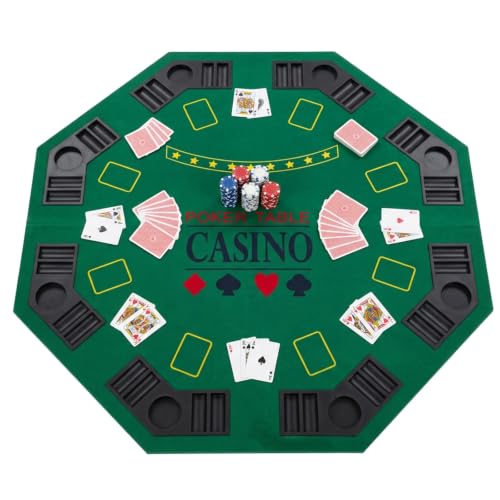
48in Octagon Folding Poker Table Top
A 48 in octagon top that drops onto any table. Chips on a bare dining table slide and scatter and cannot be stacked cleanly, and a speed cloth surface with a rail is what makes chips behave. Seventy dollars, and it stores flat.
Needs 9 ft 6 in x 13 ft
- Type
- Folding top
- Shape
- 48 in octagon
Best for: Anyone buying chips who does not already have a table.
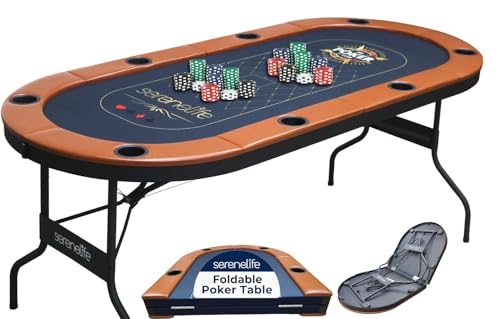
SereneLife 8-Player Folding Poker Table
Eight positions with recessed cup holders and a padded rail. Listed on a chip page because the two purchases go together: a good chip set on a table with no cup holders will meet a drink eventually, and that is how a felt gets ruined.
Needs 9 ft 6 in x 13 ft
- Players
- 8
- Folds
- Yes
Best for: A game that has outgrown a kitchen table.
Prices move constantly, so confirm before you order. As an Amazon Associate we earn from qualifying purchases. Where a table is sold only through a manufacturer's own dealer network we say so on the card, and the button searches comparable tables you can order today rather than that exact model.
How many chips, by player count
| Players | Chips needed | Set to buy | Note |
|---|---|---|---|
| Up to 4 | 200 to 250 | 300 | Comfortable, with room for a rebuy each. |
| 5 to 6 | 300 to 350 | 500 | 300 works for one buy-in and feels thin after that. |
| 7 to 8 | 400 to 500 | 500 | The standard home game, and the reason 500 is standard. |
| 9 to 10 | 550 to 650 | 750 to 1000 | Also needs a table that seats them, which is the harder problem. |
| Two tables | 1,000 plus | 1000 | Buy two matching 500 sets rather than one of 1,000, so the cases split. |
Weight the distribution toward the lowest denomination. A home tournament spends most of its time at low blinds, and running out of the smallest chip forces an early colour-up that nobody wanted. A typical 500 set runs roughly 150 of the lowest value, 150 of the second, 100 of the third and 100 across the two highest, which is right. If a set lets you choose, weight it lower still.
What weight and material actually change
| Type | Typical weight | Stacks | Sound | Best for |
|---|---|---|---|---|
| Lightweight plastic | Under 10 g | Poorly, they slide | Rattle | Children learning the game. |
| Composite with metal insert | 11.5 g | Adequately | Click, slightly hollow | A first set on a budget. |
| Clay composite | 13.5 to 14 g | Cleanly, and riffles | Dull click | A regular home game. The sweet spot. |
| Casino grade clay | About 10 g | Cleanly | Soft, distinctive | Collectors, and it surprises people how light they are. |
| Ceramic | 10 g | Cleanly, textured face | Sharper | Full-face custom printing. |
The row that surprises people is the last-but-one: real casino chips weigh about 10 grams, and the heavy 13.5 to 14 g home chips are a home-market preference rather than a copy of the professional standard. Neither is wrong. It just means heavier is not automatically more authentic.
Marked against unmarked
Serious regular groups often prefer unmarked chips, because it lets them assign whatever values the night's structure needs without the chips arguing back. That is a real advantage when the same eight people play every month and everybody already knows the convention.
For everybody else, marked chips win comfortably. An evening with unmarked chips involves agreeing the values at the start, re-explaining them three times as people arrive, and one genuine dispute about whether the black one was five or twenty five. Printed denominations delete all of that for the same money. Buy the numbered set unless you have a specific reason not to.
The surface matters as much as the chips
Chips on a bare dining table slide, scatter and stack badly, which undoes most of what you paid for. A speed cloth surface with a raised rail is what makes chips behave, and it is also what keeps them on the table when somebody pushes all in. The cheapest route is a 48 in drop-on octagon top at seventy dollars, which stores flat against a wall.
The recessed cup holders on a real table are not a luxury either: a drink on the playing surface is how a felt gets ruined, and a chip set that has been through a spilled drink never feels the same again. Tables are covered in the poker table roundup, and the room each one needs is in the poker room size calculator.
Storage, which decides whether the set stays complete
In the case, counted, put away. A set that lives loose in a drawer loses about forty chips a year to sofa cushions and coat pockets, and a set missing a third of one denomination is genuinely annoying to run a game with. Aluminium cases are the standard option and are fine. What matters is that the set has a home and gets returned to it, which sounds trivial and is the difference between a set that lasts twenty years and one that lasts three.
For the rest of the evening, see seating, since four hours in a dining chair is the other thing that ends home games early, and the lighting calculator, because a single bulb over the middle of a poker table leaves half the players reading their cards in their own shadow.
Deciding on a specific model? We review the SLOWPLAY Nash ceramic poker set review and LOYCHIP 500 piece 14 g clay composite poker chip set review in full.
Frequently asked questions
How many poker chips do you need for a home game?
Five hundred, which is why it is the standard set size. That covers eight players with enough left for rebuys and for a blind structure that goes up several times. Three hundred is workable for six players in a single-buy-in game and starts feeling thin as soon as anybody rebuys. A thousand chips is for two tables or a genuinely large tournament, and for most homes it is more chips than will ever be on the table at once.
What weight should poker chips be?
Between 11.5 and 14 grams for anything that feels like a real chip. Casino chips are typically around 10 g, which surprises people, and the heavier home chips at 13.5 to 14 g are a deliberate home-market preference rather than a copy of the professional standard. Below about 10 g the chips are lightweight plastic and they slide rather than stack, which is the thing you notice within one hand.
Are clay poker chips better than plastic?
They feel and sound better, and for a regular game that is worth paying for. Clay composite chips have a matte surface that grips slightly, so they stack cleanly and riffle in your hand, and they land with a dull click rather than a rattle. Plastic chips slide against each other and stack poorly. For a game played a few times a year the difference matters less than whether the denominations are printed on them.
What denominations should a home poker set have?
Weighted heavily toward the lowest value, which is what most 500 chip sets already do. A typical distribution runs something like 150 of the lowest denomination, 150 of the second, 100 of the third and 100 across the two highest. The reason is that a home tournament spends most of its time at low blinds, and running out of the smallest chip forces a colour-up nobody wanted. If a set lets you choose the mix, weight it lower still.
Do poker chips need denominations printed on them?
For a home game with a changing cast of players, yes, and it matters more than most buyers expect. Unmarked chips mean the values have to be agreed at the start and remembered by everybody all evening, and in practice they are re-explained several times and once argued about. Printed denominations remove that entirely. Serious regular groups often prefer unmarked chips because they can set values freely, which is a real advantage if the same people play every month.
How do you store poker chips?
In the case they came in, and put it away with the chips counted. A 500 chip set that lives loose in a drawer loses forty chips a year to sofas and pockets, and a set missing chips from one denomination is genuinely annoying to run a game with. Aluminium cases are the common option and are fine; the important part is that the set has a home and gets returned to it.
Measuring your own room before anything is delivered? The Game Room Layout Planner is the paid version of these pages: 8 printable worksheets you fill in with your own numbers, plus the full PDF, $29.
How we work: we compare published manufacturer dimensions, the governing playing standards for each game, and reviews from owners who live with the equipment. We do not test games in person, and we say so on every page. Clearance figures here are researched guidance for planning a room, not professional advice: measure your own space, and have a slate table delivered, assembled and levelled by an installer rather than moving it yourself.